Japchae: Korean Sweet Potato Glass Noodles
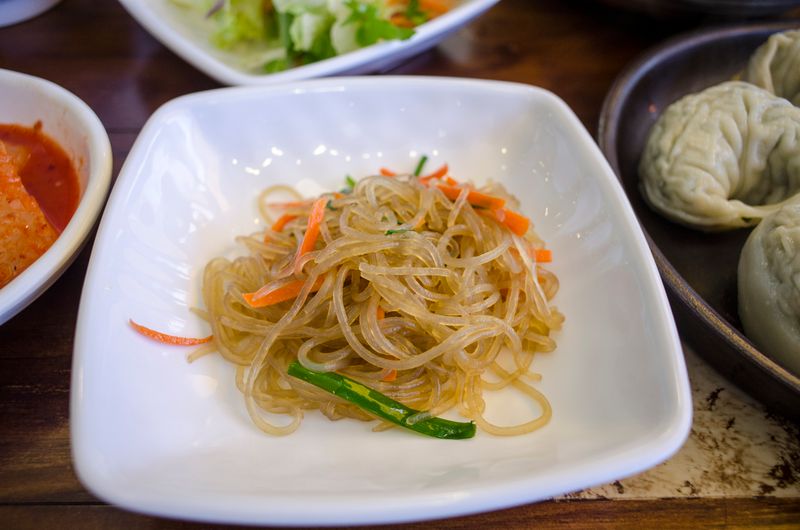
Japchae — Korean sweet potato glass noodles with colorful vegetables and soy-braised beef. The birthday dish, explained from shopping to plating.
What's in this recipe
Ingredients
Base recipe makes 6 servings
- 250gdangmyeon (Korean sweet potato starch noodles)
- 100gbeef ribeye or sirloin, sliced thin against the grain
- 110gbaby spinach
- 120gcarrot, julienned
- 100gonion, sliced thin
- 80gshiitake mushrooms, sliced
- 50gred bell pepper, julienned
- 1largeegg (for jidan garnish, optional)
- 4Tbspsoy sauce
- 2Tbspsugar
- 3Tbsptoasted sesame oil
- 2Tbspminced garlic
- 1tspblack pepper
- 1Tbspvegetable oil
- 1Tbsptoasted sesame seeds
Substitutions
No exact match? These work.
Dangmyeon noodlesCellophane noodles (mung bean starch) or rice vermicelli
Dangmyeon is the only authentic option. Others work but texture differs.
Beef ribeyePork loin, chicken thigh, or omit for vegan (use extra mushrooms)
Shiitake mushroomsKing oyster mushrooms, wood ear mushrooms, or any fresh mushrooms
SugarHoney, rice syrup, or corn syrup
Equipment
- Large skillet or wok
- Large pot for boiling noodles
- Mixing bowl
- Kitchen shears
- Cutting board and knife
How to Make It
Soak the dangmyeon noodles in hot water for 15 minutes until flexible but still slightly firm. Drain and rinse in cold water to stop cooking. Cut with kitchen shears 4 times so they are shorter. Toss with 1 Tbsp soy sauce and 1 Tbsp sesame oil. Set aside.
Marinate the beef: toss sliced beef with 1 Tbsp soy sauce, 1 tsp sugar, 1 tsp sesame oil, 1 tsp minced garlic, and a pinch of black pepper. Set aside for 15 minutes.
Blanch the spinach in boiling water for 1 minute. Rinse in cold water, squeeze dry, and season with 1 tsp sesame oil and a pinch of salt. Set aside.
Heat a large skillet over high heat with 1 Tbsp vegetable oil. Stir-fry the onion and carrot with a pinch of salt for 1-2 minutes until slightly softened. Remove and set aside.
In the same pan, stir-fry the mushrooms for 1-2 minutes until browned. Do not salt early — it releases moisture. Remove and set aside.
In the same pan, stir-fry the beef for 1-2 minutes until no longer pink. Add the red bell pepper and cook 30 seconds. Remove and set aside.
Make the sauce: combine remaining 3 Tbsp soy sauce, 1 Tbsp sugar, 2 Tbsp sesame oil, 1 Tbsp minced garlic, and black pepper in a small bowl.
Return the noodles to the skillet over medium heat. Pour the sauce over the noodles and toss for 1-2 minutes until the noodles absorb the sauce and turn glossy.
Add all the cooked vegetables and beef back to the pan. Toss everything together for 30 seconds. Drizzle with remaining sesame oil and sprinkle sesame seeds.
For the egg garnish: beat 1 egg with a pinch of salt, cook as a thin crepe in a lightly oiled pan, slice into thin strips. Place on top of the japchae.
About this dish
Japchae is the dish Koreans make when they want to impress without saying so. It looks like a tangle of translucent noodles and colorful vegetables, but every ingredient is cooked separately, seasoned separately, and combined only at the end. That is the technique, and it is what separates real japchae from the noodle-heavy versions you see at restaurants where the vegetables are speckles and the beef is optional.
The noodles are dangmyeon — sweet potato starch noodles that turn clear and chewy when cooked. They are naturally gluten-free, which makes japchae one of the few Korean dishes that works for almost everyone. The vegetables are stir-fried individually because each one has a different cooking time and water content. Spinach wilts in seconds. Carrots take two minutes. Mushrooms need color, not steam. Cooking them together turns some to mush and leaves others raw.
What Is Japchae?
Japchae originated in the 17th century as a beef-only dish served to King Gwanghaegun. Over time, vegetables were added, and the dish evolved into the colorful stir-fry it is today. The name means “mixed vegetables” — but the noodles are the star now.
The seasoning is simple: soy sauce, sugar, sesame oil, garlic, and black pepper. There is no complicated sauce to balance. The noodles absorb the seasoning directly, which means you have to taste it multiple times as you make it. Glass noodles drink up flavor and then go quiet. What tasted perfect twenty minutes ago may need another splash of soy sauce or a drizzle of sesame oil before it hits the table.
The egg garnish — jidan — is a thin crepe made from a single egg, sliced into golden strips and placed on top. It is not there for flavor. It is there because japchae without the yellow streaks looks incomplete. Maangchi always makes it. Modern Pepper always makes it. The egg is optional in theory but traditional in practice.
What to Serve Japchae With
Japchae is a banchan (side dish) or a standalone dish served at celebrations: birthdays, holidays, potlucks, and family gatherings. It is not a main course in the way bulgogi or bibimbap is. It sits alongside rice and other dishes, adding color and texture to the table.
It works at room temperature, which makes it ideal for potlucks and meal prep. Leftovers keep for three to four days in the fridge, and the noodles absorb more flavor as they sit. Some people prefer it cold straight from the fridge during summer. Others reheat it gently on the stove.
For a more substantial meal, serve it over rice with a fried egg and kimchi on the side. Or wrap it in lettuce leaves with ssamjang, the way you would wrap bulgogi. The chewy noodles and crisp vegetables work in any context.
Japchae shows up on the same holiday table as bulgogi. For other noodle dishes, see the Korean noodles guide or jajangmyeon.
Nutrition per serving
Source: U.S. Department of Agriculture, Agricultural Research Service. FoodData Central, 2019. fdc.nal.usda.gov
Frequently Asked Questions
What are japchae noodles made of?
Dangmyeon — sweet potato starch noodles. They are translucent, chewy, and naturally gluten-free. When cooked, they look like glass, which is why people call them glass noodles.
Why is my japchae bland?
Glass noodles absorb seasoning as they sit, which means the flavor fades over time. Taste it right after you make it, again after an hour, and once more before serving. Season the noodles while they are warm.
Do I have to cook each vegetable separately?
Yes. This is the defining technique of japchae. Each vegetable has a different cooking time and water content. Cooking them together makes some mushy and others raw. Cook each one separately, then combine at the end.
What is egg jidan?
Jidan is a thin egg crepe used as a garnish. Separate the yolk from the white, cook as a paper-thin crepe, then slice into thin strips. The yellow strips on top of japchae are visually striking. It is optional but traditional.
Can I make japchae ahead of time?
Yes. Japchae keeps well in the fridge for three to four days, and the noodles actually absorb more flavor as they sit. Serve it cold or at room temperature. Leftovers can also be turned into japchae mandu (dumplings).