Sundubu Jjigae: Korea's Spicy Soft Tofu Stew
Sundubu Jjigae: Korea's Spicy Soft Tofu Stew — pork, chili oil, and silky custard tofu in a bubbling earthenware pot. The Korean stew that arrives boiling.
Introduction
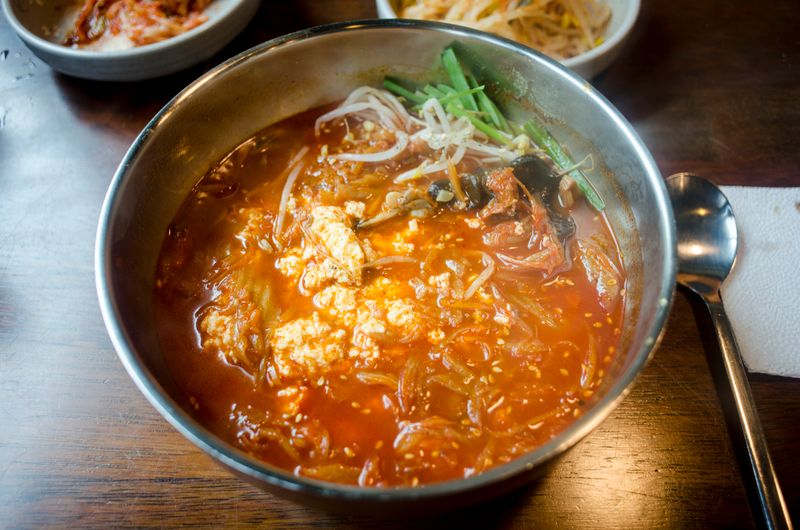
Sundubu jjigae is the Korean stew that arrives at your table still boiling. You hear it before you see it — a violent sizzle from the ttukbaegi, the earthenware pot that holds heat like nothing else. The surface is red with chili oil, the tofu barely holds its shape, and there is a raw egg sitting on top that you crack into the stew yourself. It cooks in the residual heat while you eat. The tofu is the star here, and it is unlike any tofu you have had in other Korean dishes. Sundubu comes in a tube, extra-soft and silken, almost custard-like. It breaks apart in the broth rather than holding its shape. You do not cube it or press it — you squeeze it from the tube and break it gently with a spoon. The broth underneath is built on two things: rendered pork fat and bloomed gochugaru. This is the step most people skip and the step that matters most. You sauté the chili flakes in the hot oil until they darken and release their color, creating that signature floating layer of red chili oil. Without this, you just have spicy water. With it, you have sundubu jjigae.What's in this recipe
Ingredients
Base recipe makes 2 servings
- 1tubeextra soft tofu (sundubu), 11oz / 312g
- 100gpork shoulder or ground pork
- 80goyster mushrooms, torn
- 80gkimchi, chopped (optional, Korean Bapsang version)
- 2tbspgochugaru (Korean red chili flakes)
- 2tbsptoasted sesame oil
- 1tbspsoy sauce
- 0.5tbspfish sauce
- 3clovesgarlic, minced
- 0.25mediumonion, chopped
- 2stalksgreen onion, sliced (white and green parts separated)
- 1cupwater or anchovy broth
- 1largeegg (optional)
- 0.25tspblack pepper
Substitutions
No exact match? These work.
Extra soft tofu (sundubu)Silken tofu
Similar texture, slightly firmer. Break it apart gently.
Extra soft tofu (sundubu)Firm tofu, mashed
Paik Jong Won's suggestion — mash with a knife for a similar visual texture.
Pork shoulder/ground porkPork belly, finely chopped
More fat, richer flavor.
Pork shoulder/ground porkBeef (bulgogi cut), finely chopped
Works but changes the flavor profile.
GochugaruRed chilis, finely chopped
Less complex flavor but provides heat.
Fish sauceAnchovy sauce (aekjeot)
More intense, use half the amount.
TtukbaegiSmall heavy-bottomed pot or cast iron
The ttukbaegi keeps the stew boiling at the table. Any heavy pot works for cooking.
Equipment
- Ttukbaegi (Korean earthenware pot) or small heavy-bottomed pot
- Frying pan (for blooming gochugaru)
- Spoon
How to Make It
Heat a frying pan over medium heat. Add the sesame oil, then the white parts of the green onion. Sauté until fragrant.
Add the minced pork. Cook until the fat renders and the meat is no longer pink, about 3 minutes.
Add the garlic and onion. Sauté for 1 minute until fragrant.
Push everything to the side. Add the gochugaru to the oil in the center of the pan. Stir it in the oil for 30 seconds until it darkens and becomes pasty — this is blooming the chili flakes. Do not let it burn.
Mix everything together. Add the soy sauce and fish sauce. Stir for 30 seconds.
Transfer to a ttukbaegi or small pot. Add the water or anchovy broth. Bring to a boil.
Add the mushrooms and kimchi (if using). Boil for 3 to 4 minutes.
Turn off the heat. Gently break the soft tofu into large chunks and place them in the stew. Do not stir aggressively — the tofu is fragile.
Crack the raw egg on top. Sprinkle with green parts of the green onion and black pepper. Serve immediately while still bubbling.
Expert Tips & Common Mistakes
- Bloom the gochugaru in hot oil. This is the single most important step. It creates the signature red chili oil layer and deepens the flavor. Without it, you just have spicy water.
- Do not overcook the soft tofu. Add it at the very end and let the residual heat warm it through. Overcooking makes it tough and grainy.
- Use a ttukbaegi if you have one. It keeps the stew boiling at the table, which is part of the experience. The sizzle when it arrives is the point.
- The meat must contain fat. Lean meat will not give you the rendered fat base that the chili oil needs. Pork shoulder or ground pork with some fat content is ideal.
- Crack the egg at the table, not in the kitchen. The residual heat cooks it as you eat — the yolk stays runny and enriches the broth.
- Both green and white parts of the green onion matter. White parts go in the oil base for flavor. Green parts go on top for freshness.
About this dish
What to Serve Sundubu Jjigae With
Sundubu jjigae is a one-pot meal, but it is never eaten alone. Rice is mandatory. You need something bland to balance the heat and richness. The standard pairing is a bowl of steamed white rice served alongside the ttukbaegi, and you alternate between spoonfuls of stew and mouthfuls of rice. Some people dump the rice directly into the stew. Both approaches are correct.
Banchan (side dishes) fill out the table. Kimchi is non-negotiable. The acidity cuts through the chili oil. Spinach namul and bean sprouts are common, both served cold, which contrasts with the boiling stew. A simple fish cake side dish works well too. If you want to go further, raw crab (yangnyeom-gejang) or a chive pancake (buchimgae) turn it into a feast.
The egg matters. Crack it into the stew at the table, not in the kitchen. The residual heat cooks the white while keeping the yolk runny. As you eat, the yolk breaks into the broth and enriches it. By the time you reach the bottom of the pot, the stew has changed: it is thicker, richer, and darker from the dissolved yolk. That progression is part of the dish.
Kimchi on the side is non-negotiable. If you want a chive pancake with it, make Korean pancake. Kimchi jjigae is the cabbage-forward stew if you like this heat but want more chew.
Nutrition per serving
Source: U.S. Department of Agriculture, Agricultural Research Service. FoodData Central, 2019. fdc.nal.usda.gov
Frequently Asked Questions
What is sundubu jjigae?
Sundubu jjigae is a Korean spicy soft tofu stew made with extra-soft silken tofu, pork or seafood (or both), and a chili-seasoned broth. It is served bubbling hot in a ttukbaegi with a raw egg cracked on top.
What makes sundubu jjigae different from other Korean stews?
Three things. The tofu is extra-soft silken, almost custard-like, not firm. The broth has a visible layer of red chili oil floating on top. And the raw egg cracked at the table cooks in the residual heat — no other Korean jjigae does this.
Can I make sundubu jjigae without meat?
Yes. Use mushroom or vegetable broth, skip the pork, and load up on mushrooms, kimchi, and vegetables. The chili oil base still works with just sesame oil.
Why is my sundubu jjigae not spicy enough?
The gochugaru needs to bloom in hot oil. Sauté it in the rendered pork fat and sesame oil before adding liquid — this creates the signature chili oil layer and intensifies the heat.
Do I need a ttukbaegi?
No. A ttukbaegi keeps the stew bubbling at the table, which is part of the experience, but any small heavy-bottomed pot works for cooking.