Bibim Guksu (Korean Spicy Cold Noodles)
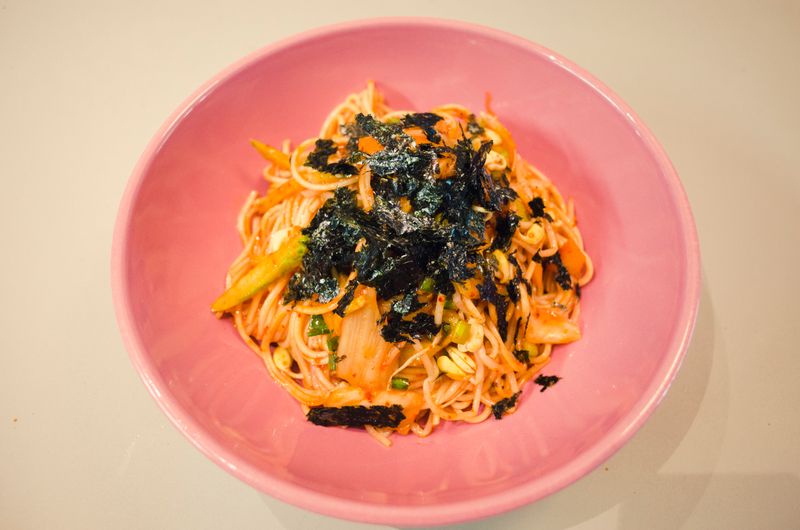
Spicy cold noodles tossed in gochujang sauce with kimchi and cucumber — a five-minute Korean summer meal that Koreans eat when it's too hot to cook.
Introduction
Bibim guksu is what Koreans make when the weather is too hot for the stove. Thin wheat noodles, boiled and rinsed in cold water, tossed with a gochujang sauce that hits spicy, sweet, and sour all at once. The whole thing takes five minutes once you have the sauce. It's the kind of lunch where you eat standing over the counter and wonder why you don't make this more often. Maangchi says she gets severe cravings if she goes two weeks without it. Korean Bapsang calls it her absolute summer favorite.What's in this recipe
Ingredients
Base recipe makes 2 servings
- 200gthin wheat noodles (somyeon)
- 3tbspgochujang (Korean red pepper paste)
- 1tbspgochugaru (Korean red pepper flakes, optional)
- 2tbspsugar
- 2tbspvinegar (rice or apple vinegar)
- 1tbspsoy sauce
- 1tbspsesame oil
- 1clovegarlic, minced
- 1tbsptoasted sesame seeds, crushed
- 0.5cupfermented kimchi, sliced
- 0.25cupkimchi brine (or water if kimchi is dry)
- 0.5smallcucumber, julienned or sliced thin
- 2largeeggs, boiled 8 minutes and halved
- 1sheetroasted seaweed (gim), torn (optional)
Substitutions
No exact match? These work.
Somyeon (thin wheat noodles)Buckwheat noodles (naengmyeon noodles)
Korean Bapsang's personal favorite. Chewier, nuttier. Cook according to package.
Somyeon (thin wheat noodles)Jungmyeon (medium-thickness wheat noodles)
Slightly thicker version. Holds more sauce.
GochujangLess gochujang (1.5 tbsp)
If you can't handle the heat, halve the gochujang and skip the gochugaru.
VinegarApple juice or orange juice
Korean Bapsang adds fruit juice for sweetness. Even soft drink works.
KimchiExtra cucumber and lettuce
Skip the kimchi if you don't have any. The dish works with just the gochujang sauce and vegetables.
SugarKorean plum syrup (maesil-cheong)
More complex sweetness. Use the same amount.
Equipment
- Large pot
- Mixing bowl
- Colander or strainer
- Chopsticks or tongs
How to Make It
Bring a large pot of water to a rolling boil.
While the water heats, make the sauce: combine gochujang, gochugaru, soy sauce, sugar, vinegar, minced garlic, and kimchi brine in a mixing bowl. Stir until smooth.
Add the somyeon noodles to the boiling water. Stir immediately so they don't stick. Cook 3 to 4 minutes.
Korean trick for chewy noodles: when the water boils over, add half a cup of cold water. Let it boil up again and repeat once more. This gives the noodles a bouncier texture.
Test a noodle. It should be cooked through but still slightly chewy.
Drain the noodles and rinse thoroughly under cold running water. Keep rinsing until the noodles are completely cold and the starchy slipperiness is gone. This step is not optional.
Shake off excess water. Add the noodles to the sauce bowl.
Add the sliced kimchi. Toss everything together with your hands or tongs until the noodles are evenly coated.
Plate the noodles. Top with cucumber, halved boiled egg, torn seaweed, sesame seeds, and a final drizzle of sesame oil.
Serve immediately. Mix everything together at the table before eating.
Expert Tips & Common Mistakes
- Rinse the noodles until they're completely cold and no longer slippery. This washes off the surface starch and gives you chewy, bouncy noodles. Skip this and the texture goes soft and mushy.
- Make the sauce ahead of time. It keeps in the fridge for up to two weeks. Hold back the sesame oil and sesame seeds until just before serving so you get that fresh nutty aroma.
- Use fermented kimchi, not fresh. The sour, funky flavor of well-aged kimchi is what makes kimchi bibim guksu work. If your kimchi still tastes like salted cabbage, it's too young for this dish.
- One inch of dry somyeon in your hand is roughly one serving. Most Korean cooks eyeball it this way instead of weighing.
- If you eat this with grilled pork belly, the cold spicy noodles cut through the fat. Chef Chris Cho calls it a perfect combination.
- Add a half teaspoon of Korean hot mustard (gyeoja) to the sauce if you want sharper heat. Korean Bapsang uses it for an extra kick.
About this dish
What Is Bibim Guksu
Bibim guksu (비빔국수) is thin wheat noodles tossed in a spicy gochujang sauce, served cold. No broth. The noodles are somyeon, boiled until just cooked, then rinsed under cold water until they’re firm and bouncy. The sauce is gochujang, vinegar, sugar, soy sauce, sesame oil, and garlic, mixed until smooth. You add kimchi, cucumber, a boiled egg, sesame seeds, and eat it cold.
It’s the everyday summer noodle of Korea. The dish you make when it’s too hot to stand near a stove for more than five minutes. Maangchi says she makes it all the time. Korean Bapsang calls it a quick light meal. Chef Chris Cho pairs it with grilled pork belly and says the cold spicy noodles cut right through the fat.
The word bibim means “mixed.” Guksu means “noodles.” You mix everything together at the table before eating. That’s the experience.
What to Serve Bibim Guksu With
Bibim guksu works as a standalone lunch. The sauce and kimchi carry the flavor, and the egg adds enough protein to call it a meal. But if you want more, two pairings stand out.
Eomukguk (fish cake soup) is the traditional side. Maangchi serves it alongside bibim guksu. You take a bite of the cold spicy noodles, sip some hot savory broth, and the spiciness fades.
Grilled pork belly is the other one. The oily, smoky meat needs something cold and sharp next to it. Bibim guksu does that better than rice.
Keep kimchi on the table. The fermented tang pairs naturally with the gochujang sauce, and well-aged kimchi is already in the dish itself.
If you want to explore more Korean noodle dishes, try jajangmyeon for something warm and savory, or ramyeon when you want heat in a broth.
Nutrition per serving
Source: U.S. Department of Agriculture, Agricultural Research Service. FoodData Central, 2019. fdc.nal.usda.gov
Frequently Asked Questions
What noodles do you use for bibim guksu?
Somyeon — thin dried wheat noodles, the same kind used in janchi guksu and kongguksu. They come in different thicknesses; the thin version is traditional. Korean Bapsang prefers buckwheat noodles. Both work. Whatever you use, cook it, rinse it in cold water until the starch is gone, and serve it cold.
What is the difference between bibim guksu and bibim naengmyeon?
The sauce concept is similar — both are cold noodles in a spicy sauce. The noodles are different. Bibim guksu uses thin wheat noodles (somyeon). Bibim naengmyeon uses chewier buckwheat or potato starch noodles. Naengmyeon noodles are denser and bouncier. The sauces differ too — naengmyeon sauce often includes pear or mustard.
Can I make bibim guksu sauce ahead of time?
Yes. Mix everything except the sesame oil and sesame seeds. It keeps in the fridge for two weeks or longer. Add the sesame oil and seeds right before serving so the nutty aroma stays fresh.
Why are my bibim guksu noodles mushy?
Two likely reasons. Either the noodles are overcooked (3 to 4 minutes is enough for somyeon), or you didn't rinse them in cold water after draining. The cold rinse stops the cooking and washes off surface starch, which is what makes the noodles firm and chewy.
Is bibim guksu served cold or hot?
Cold. Always cold. The noodles are boiled, then rinsed in cold water until completely chilled. That's part of the dish. Bibim guksu is a summer meal designed to cool you down.