Tteokbokki (Korean Spicy Rice Cakes)
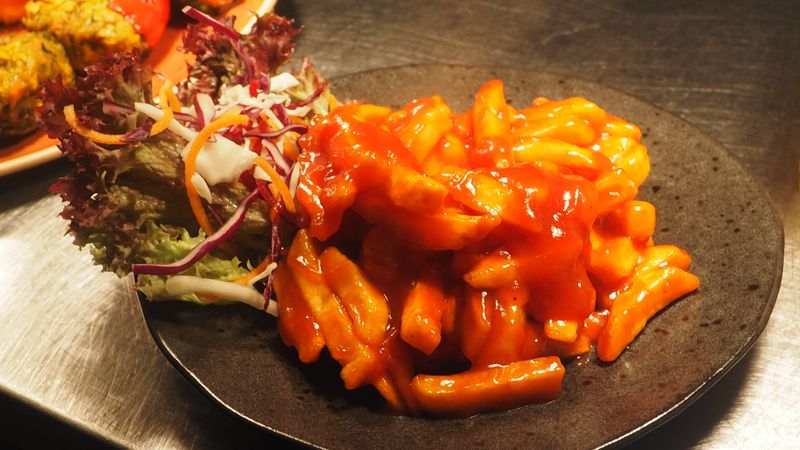
Tteokbokki (Korean Spicy Rice Cakes) — chewy rice cakes in a spicy-sweet gochujang sauce. The Korean street food that started it all.
What's in this recipe
Ingredients
Base recipe makes 4 servings
- 400grice cakes (garaetteok), fresh or frozen
- 5cupsanchovy broth (or water)
- 80ggochujang (Korean chili paste)
- 1Tbspgochugaru (Korean chili flakes)
- 1Tbspsoy sauce
- 2Tbspbrown sugar
- 4sheetsfish cake (eomuk), cut into bite-size pieces
- 3stalksgreen onion, cut into 2-inch lengths
- 2largehard-boiled eggs (optional)
Substitutions
No exact match? These work.
Rice cakes (garaetteok)No real substitute — rice cakes are essential for the chewy texture
Anchovy brothVegetable broth for vegetarian, or water (less flavorful)
GochujangSriracha + miso paste (1:1 ratio) — not ideal but works
Fish cake (eomuk)Tempura scraps (tenkasu), or omit entirely for vegetarian
Equipment
- Large shallow pan or wok
- Measuring cups and spoons
- Tongs or chopsticks for stirring
- Small pot for broth (if making from scratch)
How to Make It
Soak rice cakes in warm water for 20-30 minutes if using refrigerated or frozen. Fresh rice cakes can go straight in. Rinse once to remove surface oil.
Make anchovy broth: simmer 10-12 dried anchovies (guts removed) and a 2-inch piece of dashima (kelp) in 5 cups water for 10 minutes. Strain. You should have about 4 cups.
In a large shallow pan, combine broth, gochujang, gochugaru, soy sauce, and brown sugar. Stir until gochujang dissolves. Bring to a boil.
Add rice cakes to the boiling sauce. Stir gently and cook for 5-7 minutes until the rice cakes are soft and flexible — they should feel like mozzarella cheese when you bite into them.
Add fish cake pieces and green onion. Continue cooking for 3-4 minutes, stirring occasionally, until the fish cake puffs up and the sauce thickens.
If the sauce reduces too quickly, add a splash of water. If it is too thin, keep cooking. The starch from the rice cakes will naturally thicken the sauce.
Taste and adjust: add more gochugaru for heat, more sugar for sweetness, or more soy sauce for salt. The key is balancing salty, sweet, and spicy.
Transfer to a plate. Top with hard-boiled eggs if using. Serve immediately — the rice cakes will continue to absorb sauce and thicken as they cool.
About this dish
Tteokbokki is the dish that every Korean has eaten a thousand times. It is the snack that lines the streets of Seoul, the comfort food that appears on bad days and good days alike, the thing you eat standing up at a plastic table with chopsticks that bend when you pick up the rice cakes. The sauce is the whole point — gochujang, sweet, spicy, thick enough to cling to the chewy rice cakes in a way that makes you want to drink it from the plate.
The rice cakes are the other half. Garaetteok — long cylinders of steamed rice pounded and shaped — are cut into two-inch pieces and soaked until they are soft enough to absorb the sauce but firm enough to have that pull when you bite into them. Maangchi calls it mozzarella cheese. She is not wrong. When tteokbokki is done right, the rice cakes are chewy and soft in a way that no other food quite matches.
The Secret Is the Broth
Every tteokbokki recipe starts with a broth. Korean Bapsang says anchovy broth is the traditional choice — dried anchovies with their guts removed (the guts are bitter) and a piece of dashima (dried kelp) for umami. The anchovies and kelp simmer together for ten minutes, and what you get is a savory, slightly sweet liquid that forms the foundation of the sauce. Without it, tteokbokki is flat. The broth is not optional — it is the depth that the gochujang cannot provide on its own.
If you are vegetarian, vegetable broth works. The anchovy is the traditional choice, but the sauce is so flavorful that vegetable broth holds its own. Some people use water and compensate with extra gochujang and soy sauce. It works, but it is not the same.
What to Serve Tteokbokki With
Tteokbokki is never eaten alone. It is part of a street food meal that includes tempura — fried shrimp, sweet potato, fish cake, and vegetables — and eomuk, fish cake on a stick simmered in anchovy broth. You dip the tempura in the tteokbokki sauce and sip the eomuk broth between bites. Together, the combination is the whole experience.
At home, tteokbokki goes with hard-boiled eggs and ramyeon noodles. Drop an egg into the sauce and let it cook until the white absorbs the gochujang. Add ramyeon noodles in the last few minutes and you have a meal that will keep you full for hours. The leftover sauce is worth saving — mix it with rice the next day for a quick fried rice that is better than it has any right to be.
Dip the fried snacks in the sauce, then drink eomukguk between bites. Drop ramyeon noodles in at the end if you want a full meal. For the other rice cake types, see Korean rice cakes.
Nutrition per serving
Source: U.S. Department of Agriculture, Agricultural Research Service. FoodData Central, 2019. fdc.nal.usda.gov
Frequently Asked Questions
Why are my rice cakes hard instead of soft?
Soak refrigerated or frozen rice cakes in warm water for 20-30 minutes before cooking. If they are still hard after cooking, add more water and keep simmering — they need time to absorb liquid and soften.
What is the difference between gochujang and gochugaru?
Gochujang is a fermented chili paste — thick, sweet, spicy, and savory. It is the base of the sauce. Gochugaru is Korean chili flakes — mild, not very spicy, adds color and depth. They are not interchangeable.
Can I make tteokbokki without fish cake?
Yes. Fish cake adds umami and flavor, but it is not essential. Omit it for a vegetarian version and use vegetable broth instead of anchovy broth. Add extra soy sauce to compensate.
What is the best broth for tteokbokki?
Anchovy broth — dried anchovies simmered with a piece of dashima (kelp) — is the traditional base. It adds savory depth that water alone cannot give. Broth packets make it easy.
How do I get the sauce to thicken?
The sauce thickens naturally as the rice cakes release starch during cooking. Keep stirring and reducing on medium-low heat for 5-7 minutes. If too thin, keep cooking. If too thick, add water.