Doenjang Jjigae: Korea's Everyday Soybean Stew
Doenjang jjigae is the stew Koreans make three or four times a week — fermented soybean paste, tofu, and vegetables in six minutes. Recipe, ingredients, and tips.
Introduction
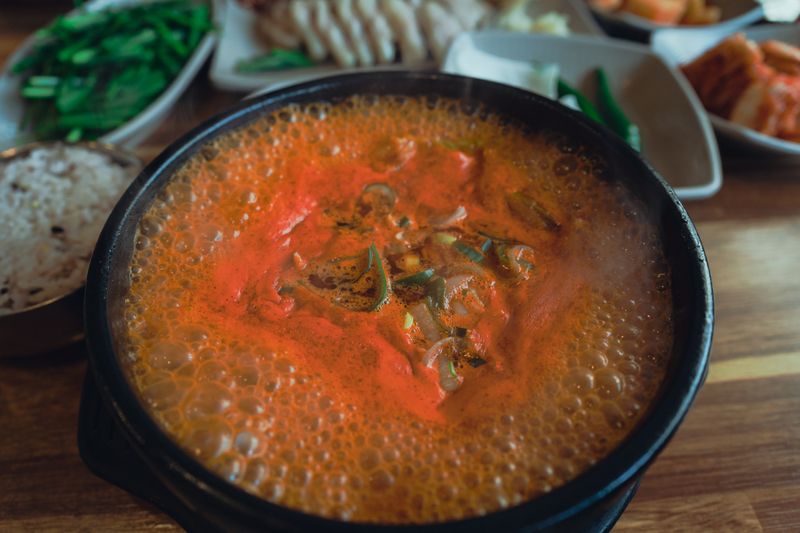
Doenjang jjigae is the stew Koreans eat on weeknights when they do not feel like cooking anything complicated. It is simpler than kimchi jjigae and more flexible than sundubu jjigae. The base is doenjang — fermented soybean paste, chunky and pungent, with a deep umami flavor that tastes like it has been aging in a cellar for years. You dissolve it directly into the broth, and the broth does the rest. The traditional liquid is ssaltteumul, the starchy water left over from rinsing rice. It adds a subtle sweetness and body that plain water cannot match. If you do not have it, anchovy stock works. The vegetables go in based on how long they take to cook: potato first, then zucchini and mushrooms, then scallions and chili at the very end. The tofu goes in last, cubed and gentle, barely warmed through before you serve it. There is no technique here. You are building a stew in a pot, adding things in order, and trusting the doenjang to do the work. That is why Koreans make this three or four times a week. It takes six minutes.What's in this recipe
Ingredients
Base recipe makes 2 servings
- 3.5tbspdoenjang (fermented soybean paste)
- 220gfirm tofu, cut into 1/2 inch cubes
- 120gzucchini (or Korean squash), quarter-sliced
- 60gpotato, cubed (optional)
- 60gonion, chopped
- 50goyster mushrooms, torn
- 2stalksscallion, sliced
- 1clovegarlic, minced
- 1smallgreen chili, sliced (optional)
- 2.5cupsrice water (ssaltteumul) or anchovy broth
- 50gbeef, thinly sliced (optional)
Substitutions
No exact match? These work.
Doenjang (fermented soybean paste)Miso paste
Use about half the amount — miso is saltier and lighter. Different flavor but works.
Zucchini / Korean squashChayote
Similar texture, milder flavor.
Rice water (ssaltteumul)Anchovy broth
More umami, more traditional for some families.
Rice water (ssaltteumul)Plain water
Works but less body and no subtle sweetness.
Firm tofuExtra soft tofu (sundubu)
Softer, will break apart. Add at the very end.
Oyster mushroomsAny mushroom — shiitake, button, king oyster
Oyster mushrooms are most common in Korean home cooking.
Equipment
- Ttukbaegi (Korean earthenware pot) or small heavy-bottomed pot
- Whisk or spoon
- Cutting board and knife
How to Make It
Bring 2.5 cups of rice water or anchovy broth to a boil in a ttukbaegi or small pot over medium-high heat.
Add the doenjang directly to the boiling broth. Whisk until the paste fully dissolves — no clumps should remain.
Add the potato first (if using). It takes the longest to cook. Boil for 3 to 4 minutes.
Add the zucchini, onion, mushrooms, and garlic. Boil for 2 to 3 minutes until the vegetables are just tender.
If using beef, add it now. It cooks in about 1 minute in the boiling broth.
Add the tofu gently. Do not stir aggressively — the cubes are fragile. Heat through for 1 minute.
Turn off the heat. Top with sliced scallion and green chili. Serve immediately while still bubbling.
Expert Tips & Common Mistakes
- Dissolve the doenjang directly into boiling broth. Do not sauté it — doenjang is meant to be dissolved, not fried.
- Add vegetables in order of cooking time. Potato first, zucchini second, scallions last. This keeps every vegetable at the right texture.
- Use a ttukbaegi. It keeps the stew boiling at the table, which is part of the experience. The stew continues to cook as you eat.
- Rice water (ssaltteumul) is the traditional liquid. The starchy water adds body and subtle sweetness. Save the water from your next rice rinse.
- This is a forgiving stew. If you do not have one vegetable, skip it. If you want more heat, add more chili. There is no wrong version.
- If it is too salty, add a small piece of potato and let it absorb some of the salt. Then remove the potato before serving.
About this dish
What to Serve Doenjang Jjigae With
Doenjang jjigae is a stew, not a meal. Rice is mandatory. You need the plain, starchy base to balance the fermented funk of the doenjang. The standard setup is a bowl of steamed white rice next to the ttukbaegi, and you alternate between spoonfuls of stew and mouthfuls of rice. Some people mix the stew directly into the rice. Both approaches are correct.
Banchan (side dishes) fill the table. Kimchi is always there. The acidity cuts through the earthy doenjang. Seasoned spinach and pickled radish are common too. If you are serving this alongside Korean BBQ, the doenjang jjigae acts as the soup course. Every Korean BBQ restaurant offers it or kimchi jjigae as the standard pairing. The lighter, earthier flavor of doenjang jjigae balances the smoky, fatty meat better than the spicier alternatives.
But the stew gets better as it sits. If you make a large pot, the leftovers are even more flavorful the next day. The vegetables absorb more of the doenjang and the broth deepens. Reheat it on the stove, not the microwave. It should arrive at your table still bubbling.
The other stew Korean BBQ restaurants put next to this one is kimchi jjigae. Keep kimchi on the table either way.
Nutrition per serving
Source: U.S. Department of Agriculture, Agricultural Research Service. FoodData Central, 2019. fdc.nal.usda.gov
Frequently Asked Questions
My doenjang jjigae at home doesn't taste like the restaurant. What am I missing?
The difference is the doenjang itself. Cheaper brands are fermented for weeks; better ones are fermented for months. Look for Sempio Tojang or similar quality brands. Some restaurants also use clam broth instead of water for another layer of umami.
Should I sauté the doenjang or dissolve it into broth?
Dissolve it into boiling broth. Add vegetables first to flavor the broth, then add the doenjang. If you add doenjang first, you get an overly salty base that doesn't absorb the vegetable flavors.
What vegetables go in doenjang jjigae?
The basics are zucchini (or Korean squash), onion, and scallion. Root vegetables, mushrooms, Swiss chard, and beans all work. Potato is common for thickening. This is a flexible, everyday stew.
Why does my doenjang jjigae smell so strong?
Doenjang is fermented and has a naturally strong, pungent smell when heated. That is normal — it is not spoiled. The smell mellows as the stew cooks and the other ingredients absorb it.
Is a splash of vinegar really traditional?
Yes. A small splash of vinegar at the end brightens the doenjang taste. Korean Bapsang confirms this works in any version, not just seafood.