Korean Pancake
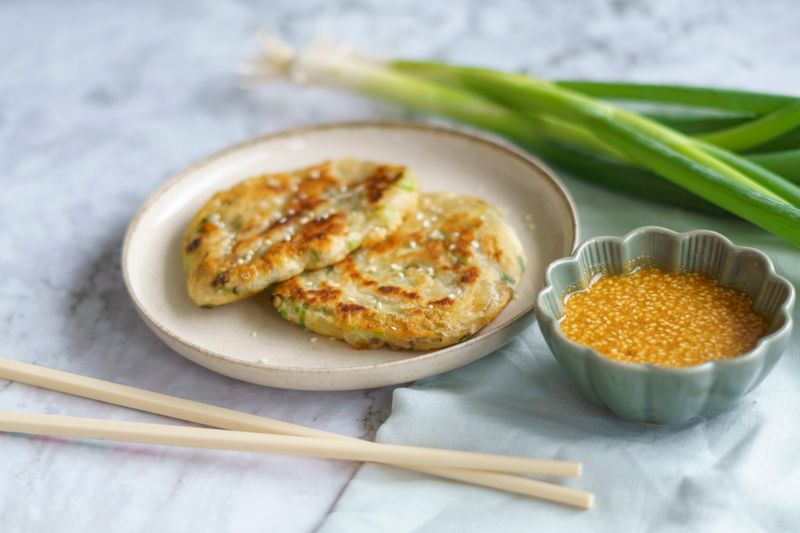
Korean pancake (jeon) — crispy, savory, shareable. From chive pancake to seafood green onion pancake.
Introduction
Korean pancakes aren't breakfast food. They're the appetizer you order at a Korean BBQ restaurant while waiting for the meat. They're the drinking snack that disappears in minutes. Flour, water, whatever vegetables are in the fridge — that's all you need to make something people fight over.What's in this recipe
Ingredients
Base recipe makes 4 servings
- 0.75cupall-purpose flour
- 1tbsppotato starch (for crunch)
- 0.75cupwater or anchovy kelp stock
- 2tspfish sauce (or salt for vegetarian)
- 0.5tspsalt
- 4ozchives, cleaned and chopped (for buchujeon)
- 12stalksgreen onion, cut to pan size (for pajeon)
- 0.25cuponion, chopped
- 4ozmixed seafood — squid, shrimp, clams (for haemul-pajeon)
- 1largeegg, beaten
- 1tbspcooking oil (plus more for frying)
Substitutions
No exact match? These work.
fish saucesalt
for vegetarian version, use same amount
chives (buchujeon)green onion (pajeon)
both are classic, green onion is more common
all-purpose flourKorean pancake mix
pre-made, convenient, found at Korean stores
wateranchovy kelp stock
deeper flavor, Maangchi's recommendation for pajeon
potato starchsticky rice powder (chapssal-garu)
adds light chewy texture instead of crunch
seafood mixkimchi
for kimchijeon variation, squeeze out excess liquid
Equipment
- Nonstick skillet or frying pan
- Mixing bowl
- Spatula
- Cutting board and knife
How to Make It
Make the batter: mix flour, potato starch, water (or stock), fish sauce, and salt until smooth. Add an egg and whisk for 30 seconds. The batter should be runny — do the spoon test (dip a spoon, run your finger through the back; the line should be clean, not bleeding)
Do not freeze the batter. At most, refrigerate for 15 minutes to keep it cold. Make it right before cooking
Add your filling: for buchujeon, fold in chopped chives and onion. For pajeon, lay green onions in the pan instead
Heat a nonstick pan over medium-high heat. Add 2 tablespoons of oil generously — if you use less, it will not be crunchy
For buchujeon, pour the batter mixture into the pan and spread evenly. For pajeon, dip green onions in batter, lay them in the pan, pour remaining batter into gaps
Cook for 5-6 minutes until the bottom is golden and crispy. Don't touch it, let it crisp up
Flip the pancake. Add another tablespoon of oil around the edge, tilting the pan so it seeps underneath
For haemul-pajeon, layer seafood, red pepper slices, and beaten egg on top before flipping
Cook for 3 more minutes. Flip again and cook 1 more minute on medium-high for extra crunch
Slide onto a plate. Serve immediately with dipping sauce: soy sauce + vinegar + gochugaru + sesame seeds
Expert Tips & Common Mistakes
- The batter must be thin and runny, like water, not like American pancake batter. Thick batter makes soggy jeon
- The spoon test: dip a large spoon, turn it over, run your finger through the back. The line should be clean. If it bleeds, the batter is too runny. But the batter should still drip from the spoon
- Add an egg to the batter for better flavor. Whisk the egg with the wet ingredients first, then incorporate the dry
- Do not freeze the batter. Make it right before cooking. At most, refrigerate for 15 minutes to keep it cold
- Medium-high heat is key. Too low and it steams instead of fries. Too high and it burns before the inside cooks
- Use a generous amount of oil, at least 2 tablespoons. If you use less, it will not be crunchy
- Lots of vegetables, less flour. Maangchi's ratio: 2.5 cups vegetables to 3/4 cup flour. The vegetables are the star
- Don't press down on the pancake while cooking, it squeezes out the moisture and makes it dense
- Add oil around the edge after flipping. This is the secret to extra crispy edges
- Serve immediately. Jeon loses crispiness within minutes. If making ahead, keep warm in a 200F oven
- The dipping sauce matters. Mix soy sauce, vinegar, gochugaru, and sesame seeds. It cuts through the oil
About this dish
What to Serve Korean Pancake With
Jeon is drinking food first. Soju and pajeon is the classic combo — cold soju cuts right through the oily crispiness. At Korean BBQ restaurants, jeon arrives before the meat does.
With a meal, serve jeon as banchan alongside rice and soup. Cut into wedges and lay them on a plate. The dipping sauce (soy sauce + vinegar + gochugaru + sesame seeds) matters — it cuts through the oil and adds brightness.
For a full spread, make two types — buchujeon (chive) and haemul-pajeon (seafood). Vegetarians and seafood lovers both covered.
Check out korean egg roll or korean side dishes for more banchan ideas.
Nutrition per serving
Source: U.S. Department of Agriculture, Agricultural Research Service. FoodData Central, 2019. fdc.nal.usda.gov
Frequently Asked Questions
What is jeon?
Jeon (전) is a category of Korean pan-fried dishes. Batter plus filling, pan-fried until crispy. Varieties include pajeon (green onion), buchujeon (chive), haemul-pajeon (seafood), kimchijeon (kimchi), and bindaetteok (mung bean). Served as banchan, appetizers, or drinking snacks.
How do I get jeon crispy?
Three things matter: medium-high heat (not low), thin batter (not thick), and add oil around the edge after flipping. The oil seeps underneath and fries the bottom to a crunch. Serve immediately, jeon loses crispiness as it sits.
What's the difference between pajeon and haemul-pajeon?
Pajeon (파전) is a green onion pancake. Haemul-pajeon (해물파전) adds seafood on top. Same batter, same technique. Haemul-pajeon is the version at Korean BBQ restaurants.
Can I make jeon without fish sauce?
Yes, use salt instead. The fish sauce adds umami, but salt works fine. Some add a pinch of sugar to the batter to compensate.