Naengmyeon (Korean Cold Noodles): Mul vs Bibim, How to Make Both
Cold buckwheat noodles in icy broth or spicy sauce — two styles of Korean naengmyeon and how to make them at home, from the simple package version to full from-scratch broth.
Introduction
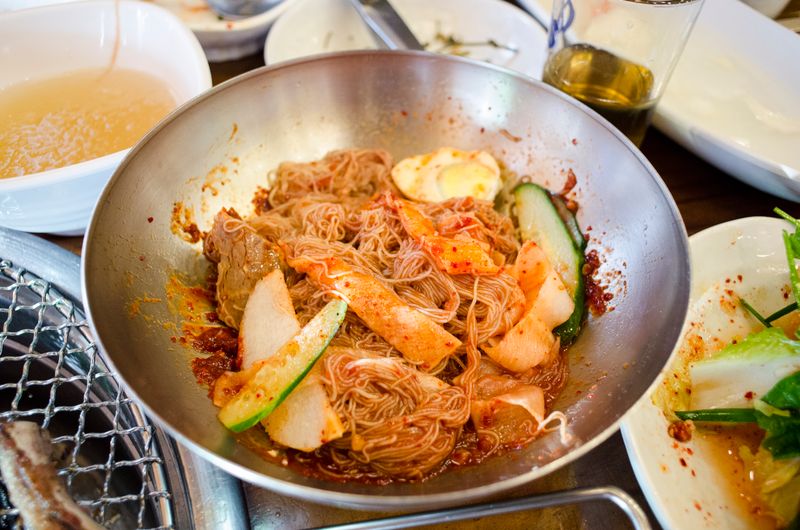
Naengmyeon is the dish Koreans argue about most passionately. Two styles, both from North Korea. Pyongyang naengmyeon: soft buckwheat noodles in clear, cold broth. Hamhung naengmyeon: chewier potato starch noodles in spicy sauce, no broth at all. Both served ice-cold, sometimes with actual ice in the bowl. Maangchi keeps it practical — packaged noodles with the included broth base, pear juice for sweetness, freeze the broth into slush. Chung's K Food simmers beef brisket for hours and builds the broth from scratch. The traditional Pyongyang way uses dongchimi brine mixed with beef broth, cooled slowly so the flavor stays.What's in this recipe
Ingredients
Base recipe makes 2 servings
- 2packetsnaengmyeon noodles (buckwheat and wheat flour, with broth base)
- 4cupscold water (for broth)
- 1mediumKorean pear (or Asian pear), peeled
- 0.5smallcucumber, julienned
- 2largeeggs, hard-boiled, halved
- 0.5tspsugar (for cucumber)
- 0.5tspsalt (for cucumber)
- 1tbspvinegar (white or apple)
- 1tspsugar (for pear soaking water)
- 1packetmustard oil (from noodle package)
- 1tbsptoasted sesame seeds
- 4smallcherry tomatoes, halved (optional)
Substitutions
No exact match? These work.
Packaged naengmyeon broth baseHomemade beef broth + dongchimi brine
Traditional method: simmer beef brisket 3 hours, mix with fermented radish kimchi brine. Cool gradually — don't chill too fast or you lose the umami.
Korean pearAsian pear or ripe Bartlett pear
The pear juice goes into the broth for sweetness. Grate and squeeze through cloth.
Buckwheat naengmyeon noodlesSweet potato starch noodles (for Hamhung-style)
Chewier, bouncier. Different dish — bibim naengmyeon uses these with spicy sauce instead of broth.
Mustard oil (from package)Prepared Korean hot mustard (gyeoja)
Mix a small amount into the broth. Adds sharp heat that clears the sinuses.
Cherry tomatoesPickled radish (danmuji)
More traditional garnish. Chung's K Food makes quick-pickled radish with vinegar, sugar, salt.
Equipment
- Large pot for boiling noodles
- Medium pot for broth (if making from scratch)
- Large shallow bowls
- Colander or strainer
- Cotton cloth or cheesecloth (for pear juice)
How to Make It
Season the cucumber: cut it in half lengthwise, slice thin, toss with half a teaspoon each of sugar and salt plus one tablespoon of vinegar. Set aside.
Make pear juice: peel and grate half the pear. Squeeze the pulp through a cotton cloth or cheesecloth into a bowl. Set juice aside. Slice the remaining pear half thin and soak in sugar water (1 tsp sugar in cold water) to prevent browning.
Prepare the broth: empty both packaged broth bases into a large bowl. Add 4 cups of ice-cold water and the pear juice. Stir and taste — adjust with a pinch of sugar or vinegar if needed.
For slushy broth (recommended): make the broth 5 to 6 hours ahead and put it in the freezer. It should turn into an icy slush, not a solid block. Maangchi says this is what makes it great.
Boil a large pot of water. Add the naengmyeon noodles and cook 4 to 5 minutes, stirring occasionally so they don't stick.
Test a noodle. It should be chewy but cooked through. Buckwheat noodles stay firm even when done.
Drain the noodles and rinse under cold running water. Rub the noodles between your hands to scrub off all the surface starch. This is what makes the noodles chewy and glossy. Rinse until the water runs clear.
For the final rinse, add ice to the water. The noodles should be ice-cold when they go into the bowl.
Divide the noodles between two large shallow bowls. Pour the slushy or cold broth over the noodles.
Garnish with cucumber, pear slices, halved boiled egg, and cherry tomatoes. Add mustard oil from the package. Crush sesame seeds and sprinkle on top just before serving.
Expert Tips & Common Mistakes
- Cook the noodles last. Maangchi is firm about this — naengmyeon noodles go soggy fast. Everything else should be ready before the noodles hit the water.
- Rub the noodles between your hands while rinsing. This scrubs off the starch that makes them slippery. It's what gives the noodles that chewy, glossy finish.
- Freeze the broth into slush. Five to six hours in the freezer, then let it thaw slightly before pouring. Those icy crystals in the broth are part of the dish.
- The traditional Pyongyang method uses buckwheat flour kneaded with hot water (60–70°C in summer, 80–90°C in winter) and pressed through a noodle press directly into boiling water. The noodles cook in about 80 seconds. This is how restaurants do it.
- Chung's K Food makes the broth from scratch: beef brisket simmered for an hour with radish, pear, onion, garlic, ginger, and peppercorns. Season with gukganjang (Korean soup soy sauce), salt, sugar, and vinegar after cooling.
- Don't chill the from-scratch broth too fast. The Pyongyang tradition says to let it cool gradually to preserve the umami. Rapid chilling mutes the flavor.
About this dish
What Is Naengmyeon
Naengmyeon (냉면) is cold buckwheat noodles, either in icy broth (mul naengmyeon) or tossed in spicy sauce (bibim naengmyeon). The noodles are made from a mix of buckwheat and wheat flour, pressed thin and cooked until chewy. They break if you pull them but bounce when you chew. No other Korean noodle has that texture.
The two styles come from different parts of North Korea. Pyongyang naengmyeon uses softer buckwheat noodles in a clear broth made from beef and dongchimi (fermented radish kimchi brine). The broth is cold and slightly sweet with a vinegar edge. Hamhung naengmyeon uses chewier potato starch noodles tossed in spicy gochujang sauce. No broth at all.
Both versions came south with refugees during the Korean War. Naengmyeon restaurants in Seoul have lines out the door every summer. Some stay packed year-round.
At home, most Koreans use packaged noodles that come with a broth base. Maangchi’s method: mix the packet broth with cold water and pear juice, freeze it into slush, boil the noodles, rinse them cold, pour the slushy broth over. Twenty minutes start to finish. Chung’s K Food does the full version — beef brisket simmered for an hour with radish, pear, onion, garlic, and ginger. Strain it, season with soy sauce, sugar, and vinegar, then chill.
What to Serve Naengmyeon With
Naengmyeon after Korean BBQ is a ritual. You eat galbi or samgyeopsal until you’re full, then a bowl of icy naengmyeon arrives. The cold broth cuts through all that smoky, fatty meat and settles your stomach. Every Korean BBQ restaurant either has naengmyeon on the menu or knows you’ll ask for it.
On its own, naengmyeon is a full meal. The noodles, broth, egg, and pear are enough. Pickled radish on the side if you want it.
Kimchi on the side is standard with mul naengmyeon. If you want something warm alongside it, eomukguk (fish cake soup) works — hot savory broth next to cold spicy noodles, same idea as pairing it with bibim guksu.
For more Korean noodle dishes, see the full guide to Korean noodles. Bibim guksu is the wheat noodle equivalent of bibim naengmyeon if you can’t find buckwheat noodles.
Nutrition per serving
Source: U.S. Department of Agriculture, Agricultural Research Service. FoodData Central, 2019. fdc.nal.usda.gov
Frequently Asked Questions
What is the difference between mul naengmyeon and bibim naengmyeon?
Mul naengmyeon is cold noodles in icy broth — the broth is the point. Bibim naengmyeon is cold noodles in spicy gochujang sauce with no broth. Same noodles, completely different dishes. Mul is from Pyongyang, bibim is associated with Hamhung, though both are available everywhere in Korea.
Can I use the broth packet that comes with naengmyeon noodles?
Yes. Maangchi uses the packaged broth base and adds pear juice for extra sweetness. It tastes good. If you want the full experience, make beef broth from scratch, but the package version is what most people use at home.
Why are my naengmyeon noodles mushy?
Three possible reasons. You cooked the noodles too early (cook them last — they go soggy fast). You didn't rinse off the starch (rub between your hands under cold water until the water runs clear). Or you overcooked them — 4 to 5 minutes is usually enough, check the package.
What is dongchimi and why does it matter for naengmyeon?
Dongchimi is fermented radish water kimchi. The brine is tangy, slightly fizzy, cold. Traditional Pyongyang naengmyeon mixes dongchimi brine with beef broth to make the soup. It adds a fermented depth that no packaged broth can match. Making it takes a few days.
Is naengmyeon served in summer only?
Traditionally, yes. It's a summer dish — icy cold broth to cool you down. But in Korea, naengmyeon restaurants are open year-round. Some Koreans eat it after Korean BBQ regardless of season, because the cold broth cuts through the heavy, smoky meat.