Kalguksu (Korean Knife-Cut Noodle Soup)
Knife-cut wheat noodles in anchovy or chicken broth with zucchini and potato — Korea's rainy-day comfort soup that gets better as you eat it.
Introduction
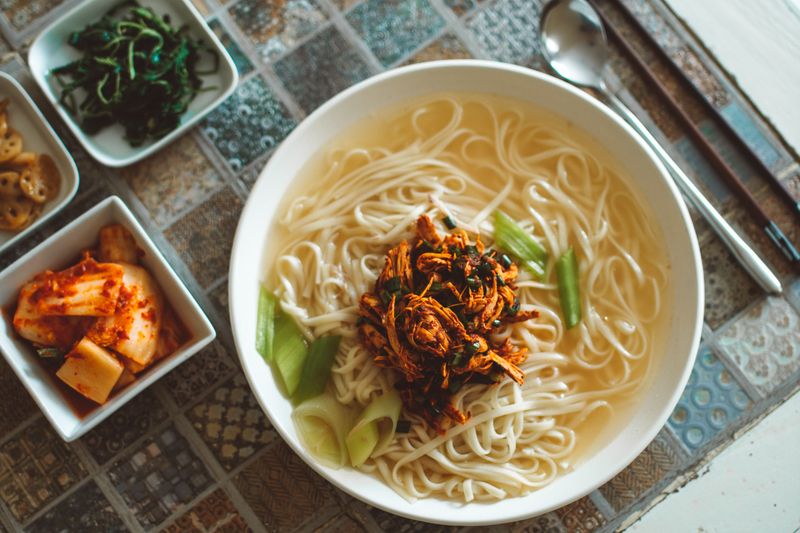
Kalguksu is the soup Korean grandmothers make when the weather turns cold and the house needs to smell like something warm. Knife-cut wheat noodles in a clean broth with zucchini, potato, garlic. The name means "knife noodles" — the dough is rolled flat and sliced by hand, not pulled or extruded. The noodles come out irregular and slightly thick, with a chew that no machine can get right. Seonkyoung Longest filmed herself making it from a hotel room in Seoul because she couldn't wait to share it. Maangchi makes the chicken version, dak-kalguksu, with noodles kneaded until they feel like an earlobe. They both say it's easy. It is.What's in this recipe
Ingredients
Base recipe makes 2 servings
- 200gfresh kalguksu noodles (or dried knife-cut noodles)
- 2.5cupsanchovy broth (or chicken broth)
- 100gzucchini, julienned or sliced into matchsticks
- 60gpotato, thinly sliced (optional)
- 60gonion, sliced
- 60gcarrot, julienned
- 1clovegarlic, finely chopped
- 2stalksgreen onion, chopped
- 2tbsplight soy sauce
- 0.5smallred chili, sliced (optional)
- 1pinchblack pepper
- 1tspsesame seeds
- 1sheetroasted seaweed (gim), crushed (optional)
Substitutions
No exact match? These work.
Fresh kalguksu noodlesStore-bought dried kalguksu noodles
Available at Korean grocery stores. Dust off excess starch before adding to broth so it doesn't get cloudy.
Fresh kalguksu noodlesHomemade from scratch
Maangchi's ratio: 3.5 cups all-purpose flour, 0.5 cup starch, 1 tsp salt, 2 tbsp oil, 1.25 cups water. Knead until it feels like your earlobe. The starch keeps the noodles chewy in the broth.
Anchovy brothChicken broth
Maangchi's dak-kalguksu uses chicken breast simmered for an hour with garlic and onion. Milky, clean flavor.
Anchovy brothVegetable broth
Seonkyoung Longest suggests this for a vegan version. Remove the dried anchovies from the stock recipe.
ZucchiniKorean squash (aehobak)
Traditional choice. Similar texture, slightly sweeter.
Soy sauceSalt + fish sauce (2 tsp fish sauce + 1 tsp salt)
Maangchi seasons the chicken version this way. Slightly different flavor profile.
Equipment
- Large pot
- Rolling pin
- Knife and cutting board
- Medium pot (for broth, if making from scratch)
How to Make It
Bring 2.5 cups of anchovy broth or chicken broth to a boil in a large pot.
Add the onion, carrot, and potato (if using). These take longest to cook. Boil for 3 minutes.
Add the zucchini. Boil for 1 more minute.
If using fresh noodles, dust off the excess starch and flour before adding them. This keeps the broth from getting too thick and cloudy.
Add the noodles to the boiling broth. Stir immediately for the first minute or two so the noodles don't stick to each other. Cook 4 to 5 minutes for fresh noodles, or follow package instructions for dried.
Season with 2 tablespoons light soy sauce. Taste the broth after 1 tablespoon — it might be enough.
Add chopped garlic, green onions, sliced red chili, and black pepper.
Turn off the heat. Sprinkle sesame seeds and crushed roasted seaweed on top. Serve immediately while still bubbling.
Expert Tips & Common Mistakes
- Dust off the starch from fresh noodles before adding them to the pot. If you skip this, the excess flour thickens the broth into something closer to gravy than soup.
- The noodles keep absorbing broth as you eat. The bowl gets thicker toward the end. That's not a problem — it's part of what makes kalguksu different from other noodle soups.
- If making noodles from scratch, knead until the dough feels like your earlobe. Maangchi is specific about this. The starch in the dough (half cup per batch) keeps the noodles chewy even after sitting in hot broth.
- In Asian cuisine, long noodles symbolize long life. Maangchi tries to make them as long as possible when cooking for someone she cares about.
- For a spicy version, Maangchi makes a quick yangnyeomjang: 1 to 2 tablespoons gochugaru mixed with 2 teaspoons sesame oil. Stir it into your bowl at the table.
- Seonkyoung Longest uses Korean anchovy broth made with onion, garlic, and black peppercorn. She calls it the ultimate broth. Chicken broth from a box works too.
About this dish
What Is Kalguksu
Kalguksu (칼국수) is hand-cut wheat noodles in a clear broth with vegetables. The dough is rolled flat on a cutting board, folded, and sliced with a knife into thick, irregular strips. No noodle machine. That unevenness is what gives kalguksu its texture — the rough edges catch the broth, and the thickness varies bite to bite. Some pieces come out thin, others thick. You get a different chew every bite.
The broth is usually anchovy-and-kelp stock. Simple. Clean. Some families use chicken broth instead — Maangchi’s dak-kalguksu simmers chicken breast for an hour with garlic and onion until the broth turns slightly milky. Vegetables go in by cooking time: potato first, then zucchini and carrot, then green onion and chili right at the end.
Maangchi remembers her family making kalguksu when she was young. It was a group effort. Somebody would be kneading the massive dough, others would take turns because kneading that much was exhausting. Neighbors would come over. The whole thing was as much about the gathering as the food.
The noodles absorb broth as you eat. The bowl gets thicker and richer toward the bottom. That’s not something to fix. That’s the whole experience.
What to Serve Kalguksu With
Kalguksu is already a full meal in one bowl. Noodles, broth, vegetables, protein if you use the chicken version. But kimchi on the side is automatic. The sharp fermented tang cuts through the warm, mild broth.
If you want to make it a bigger spread, doenjang jjigae at the table is a common pairing in Korean restaurants. Same kind of warm, homey food. Rice on the side is optional — the noodles are the starch.
For a spicy kick without changing the recipe, make Maangchi’s quick yangnyeomjang: gochugaru and sesame oil mixed at the table. Stir it into your bowl. Or don’t. The plain version is just as good.
More Korean noodle dishes to try: bibim guksu when you want cold noodles in summer, naengmyeon for icy buckwheat noodles, or ramyeon when you want instant.
Nutrition per serving
Source: U.S. Department of Agriculture, Agricultural Research Service. FoodData Central, 2019. fdc.nal.usda.gov
Frequently Asked Questions
What does kalguksu mean?
Kal means knife. Guksu means noodles. The dough is rolled flat and cut with a knife into strips. That's it. The noodles come out slightly uneven, which is the point — the irregular edges hold the broth better than machine-made noodles.
What broth do you use for kalguksu?
Anchovy broth is the most common. Dried anchovies and kelp simmered with onion and garlic. Chicken broth works too — Maangchi's dak-kalguksu uses chicken breast simmered for an hour. Both give you a clean, clear soup.
Can I use store-bought noodles instead of making them from scratch?
Yes. Fresh kalguksu noodles are sold at Korean grocery stores. Dried ones work too. Dust off the excess starch before adding to the broth. Homemade noodles have a better chew, but store-bought is what most people use at home.
Why is my kalguksu broth cloudy?
Too much starch from the noodles. Dust off the flour and potato starch coating before adding fresh noodles. If using dried, rinse them briefly. The broth should be clear or slightly milky, not thick.
Is kalguksu a winter dish?
Koreans eat it on rainy days and in winter. The hot broth and thick noodles warm you up. But kalguksu restaurants in Korea are open year-round. There's no rule against eating it in summer.