Korean BBQ Recipe
Korean BBQ Recipe — the complete guide to grilling at home. Cuts, marinades, banchan, and the rules that make it work.
What's in this recipe
Ingredients
Base recipe makes 4 servings
- 2lbsgalbi (flanken-cut short ribs), quarter-inch cut
- 1lbpork belly (samgyeopsal), sliced half-inch thick
- 1lbbeef (boneless short rib or strip loin), sliced thin
- 1mediumAsian pear, peeled and quartered
- 0.5cupsoy sauce
- 0.25cupbrown sugar
- 4clovesgarlic
- 1inchginger, peeled
- 0.5mediumonion, quartered
- 1Tbspsesame oil
- 1headlettuce or perilla leaves (for wrapping)
- 1batchscallion salad (pared down green onions, seasoned with sesame oil and vinegar)
- 0.5cupssamjang (store-bought or homemade)
Substitutions
No exact match? These work.
Galbi (flanken-cut short ribs)Boneless short ribs (easier to eat) or bulgogi (thinly sliced beef)
Asian pearBosc pear or 2 Tbsp sugar + 1 Tbsp rice vinegar
Pork bellyChicken thighs or mushrooms for non-pork eaters
SsamjangMix doenjang + gochujang + sesame oil + garlic + sugar
Equipment
- Korean barbecue grill (gas or charcoal)
- Tongs
- Kitchen scissors
- Mixing bowls (several)
- Blender or food processor (for marinade)
How to Make It
Make the marinade: blend Asian pear, soy sauce, brown sugar, garlic, ginger, and onion until smooth. The pear breaks down the protein and tenderizes the beef — this is the secret.
Marinate the galbi: coat the short ribs in the marinade. Refrigerate for at least 4 hours, or overnight for best results. The longer it marinates, the more tender it gets.
Prepare the pork belly: slice into half-inch thick pieces. Season one half with just salt — plain, to taste the pork itself. Season the other half with spicy gochujang marinade (gochujang + pear + garlic + ginger + soy sauce + sesame oil) if desired.
Prepare the beef: slice boneless short rib or strip loin thin. Toss with sesame oil, salt, soy sauce, minced garlic, and white scallion parts. Refrigerate until ready to grill.
Set the table: arrange banchan (kimchi, scallion salad, pickled vegetables, pickled radish). Stack lettuce or perilla leaves on a plate. Put ssamjang in a small dish. Have scissors and tongs ready.
Heat the grill: if using charcoal, wait for coals to turn white. If using gas, heat on high. Rub the grill with beef fat to season and prevent sticking.
Grill the meats: start with galbi — it takes the longest. Cook 2-3 minutes per side until charred and caramelized. Move meat around to prevent the marinade from burning. Use scissors to cut into bite-sized pieces.
Grill pork belly next — it renders fat and flavors the grill. Cook until golden and crispy on the edges. Then grill the thin beef — it cooks in under a minute per side.
Eat: take a lettuce or perilla leaf, add meat, a dab of ssamjang, scallion salad, maybe kimchi. Fold and eat in one bite. There is no wrong way to do it.
About this dish
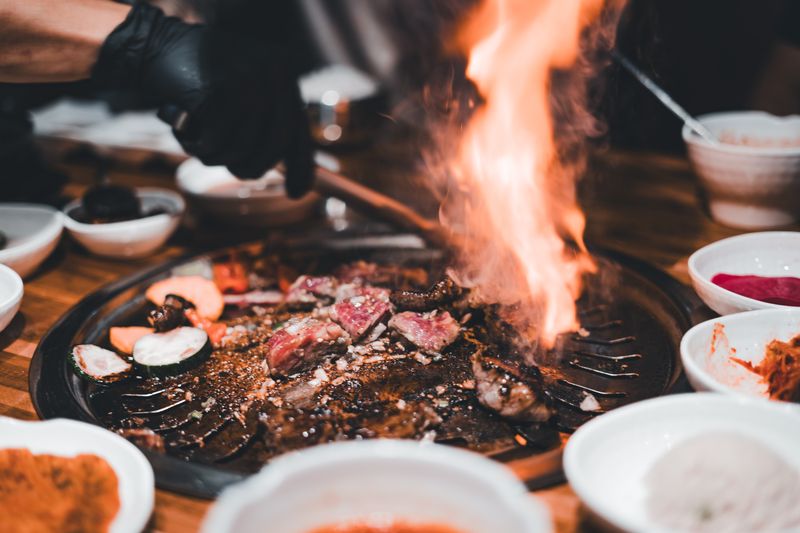
Korean BBQ is not a recipe. It is a format. You gather around a grill, cook meat at the table, wrap it in lettuce, and eat it with whatever banchan is in front of you. The grill sizzles, the smoke rises, and the table fills with small dishes — kimchi, scallion salad, pickled radish, ssamjang. David Shin from Cote Korean Steakhouse says it best: “Korean BBQ is super fun because as the meat is getting cooked you’re looking at it, you’re hearing the sizzle, you’re smelling it.” That is the experience.
The meat is the centerpiece, but the setup matters as much as the grill. You need tongs, scissors (Korean BBQ scissors are a real tool), and “every bowl and plate you have in the house” (Kind of Cooking). The table should look abundant — that is the point. Korean BBQ is a communal meal, not a solo dinner.
The Cuts Matter
Galbi — flanken-cut short ribs, quarter-inch thick — is the star of Korean BBQ. Ask your butcher to cut them. The bone adds flavor and the fat renders on the grill, creating a char that is impossible to replicate indoors. If you go to your butcher, ask for quarter-inch cut. That is the simplest way.
For everyday Korean BBQ, samgyeopsal (pork belly) is the go-to. It is the cut Koreans eat most often — thick slices of belly, grilled until the fat renders and the edges crisp. Freeze the pork belly for 10-20 minutes before slicing and it holds together better. Half-inch thick is ideal. Some people season it with just salt. Others coat it in a spicy gochujang marinade. Both are correct.
Bulgogi — thinly sliced beef in a sweet soy marinade — is the beginner-friendly option. It cooks in under a minute per side and the marinade does all the work. The sesame oil version (salt, soy sauce, garlic, sesame oil, scallion) is simpler and lets the beef speak.
The Marinade Is the Secret
David Shin’s marinade from Cote uses Asian pear as the base. The pear breaks down the protein and tenderizes the beef — that is why restaurant galbi is so tender. Blend pear, soy sauce, sugar, garlic, ginger, and onion until smooth. Coat the short ribs and refrigerate for at least 4 hours. Overnight is better.
For simpler cuts, sesame oil + salt + soy sauce + garlic is enough. The marinade does not need to be complicated. What matters is the time — let the meat sit in it long enough to absorb the flavor.
What to Serve Korean BBQ With
The banchan is not decoration. It is the balance. Kimchi cuts through the fat. Scallion salad adds freshness. Pickled vegetables cleanse the palate between bites. Ssamjang, the thick, funky paste of doenjang and gochujang, is the glue that holds every wrap together.
The wrap is the system: lettuce or perilla leaf, meat, ssamjang, scallion salad, maybe a piece of kimchi. Fold it. Eat it in one bite. There is no wrong way to do it. David Shin says it best: “There’s nobody that tells you how to eat — you can mix and match any flavors. All you need to do is really enjoy the cuisine, enjoy your company, and have a great time.”
Samgyeopsal is the pork night. Bulgogi and galbi are the beef nights. Mix ssamjang for the wraps, and keep kimchi on the grill.
Nutrition per serving
Source: U.S. Department of Agriculture, Agricultural Research Service. FoodData Central, 2019. fdc.nal.usda.gov
Frequently Asked Questions
What cuts of meat should I get for Korean BBQ?
Galbi (flanken-cut short ribs) is the star. Boneless short ribs are easier. Samgyeopsal (pork belly) is the everyday favorite. Bulgogi is quick and beginner-friendly. Ask your butcher to slice thin.
What is the best marinade for Korean BBQ?
Sweet soy marinade with Asian pear is traditional for galbi — the pear tenderizes the beef. Sesame oil + salt + soy sauce works for any beef. For pork belly, some prefer just salt.
How do I set up a Korean BBQ table at home?
Grill, tongs, chopsticks, scissors. Set out banchan — kimchi, scallion salad, pickled vegetables. Lettuce or perilla leaves for wrapping. Ssamjang in a small dish. The table should feel abundant.
How do I prevent meat from sticking to the grill?
Rub the grill with beef fat before cooking. Make sure the grill is hot before adding meat. Do not move it too early — let it release naturally.
What is the correct way to eat Korean BBQ?
There is no single correct way — mix and match freely. The classic: lettuce leaf, meat, ssamjang, scallion salad, kimchi. Fold and eat in one bite.