Korean BBQ Sauce
Ssamjang: Korean BBQ Dipping Sauce — the essential mix of doenjang and gochujang with garlic, sesame, and aromatics. Two versions: simple and gourmet.
Introduction
Ssamjang (쌈장) is the sauce that makes Korean BBQ complete. It's a thick, savory paste you dip grilled meat into before wrapping it in lettuce. Every Korean BBQ restaurant has it on the table, right next to the raw garlic and chili peppers. The base is two things: doenjang (fermented soybean paste) and gochujang (fermented chili paste). Mix them together with some garlic, sesame oil, and something sweet, and you've got ssamjang. The ratio matters. Most Korean households use a 4:1 doenjang to gochujang ratio. More doenjang than gochujang. Doenjang brings the deep, funky umami. Gochujang brings heat and a little sweetness. Too much gochujang and the sauce becomes a chili paste. Too much doenjang and it's just salty bean paste. Four to one is the sweet spot. There are two versions: the simple one and the gourmet one. The simple version is just doenjang, gochujang, chopped onion, garlic, sesame oil, and sesame seeds. Five minutes, done. The gourmet version adds mayonnaise for creaminess, honey instead of sugar, and sometimes a touch of wasabi or mustard for a kick that cuts through fatty pork belly.What's in this recipe
Ingredients
Base recipe makes 4 servings
- 4tbspdoenjang (fermented soybean paste)
- 1tbspgochujang (fermented red chili paste)
- 0.25smallonion, finely chopped
- 1clovegarlic, minced
- 1tspsesame oil
- 1tsphoney or brown sugar
- 1tsptoasted sesame seeds
Substitutions
No exact match? These work.
doenjangwhite miso paste
Closest substitute. Miso is lighter and less funky, so use slightly less.
gochujangsambal oelek + pinch of sugar
Won't have the same fermentation depth, but works in a pinch.
honeybrown sugar or rice syrup
All work for sweetness. Rice syrup is most authentic.
sesame oiltoasted sesame seeds only
Skip the oil if you don't have it. The seeds still give nuttiness.
Equipment
- Small mixing bowl
- Spoon
- Cutting board and knife
How to Make It
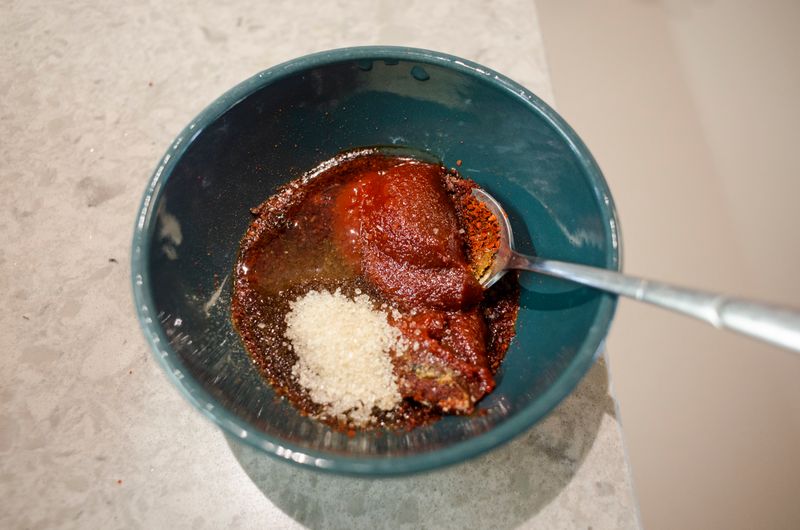
Add the doenjang and gochujang to a small bowl. The ratio is 4 to 1, doenjang to gochujang. This is the base.
Add the finely chopped onion and minced garlic. The onion gives texture and a sharp bite that balances the fermented pastes.
Pour in the sesame oil and honey. The honey rounds out the saltiness of the doenjang. Brown sugar or rice syrup works too.
Sprinkle in the toasted sesame seeds. Mix everything together until it's uniform and glossy.
Taste and adjust. Too salty? Add a little more honey. Too thick? A tiny splash of water. Too mild? Add more gochujang.
Serve immediately or cover and refrigerate. The flavors deepen after an hour in the fridge.
Expert Tips & Common Mistakes
- Always use doenjang that comes in a tub or box, not a squeeze bottle. The squeezable versions have additives and aren't as thick.
- For the gourmet version, add 1 tablespoon of mayonnaise. It makes the sauce creamy and smooths out the sharp edges of the garlic.
- A tiny dab of wasabi or mustard, about half a teaspoon, cuts through the fattiness of pork belly. It's a trick from Korean BBQ restaurants.
- Chop the onion as finely as possible. Big chunks overpower the sauce. You want the onion to blend in, not dominate.
- Let it sit for at least 30 minutes before serving. The garlic mellows and the flavors meld.
- Ssamjang keeps in the fridge for up to a week. The taste actually improves on day two.
About this dish
Simple vs. Gourmet Ssamjang
Most Korean households make the simple version. Faster, pantry staples, tastes great. The gourmet version adds mayonnaise and wasabi. Creamier, more rounded, and the kind of sauce that makes people ask for the recipe.
| Simple | Gourmet | |
|---|---|---|
| Doenjang | 4 tbsp | 4 tbsp |
| Gochujang | 1 tbsp | 1 tbsp |
| Onion | Finely chopped | Finely chopped |
| Garlic | 1 clove | 1 clove |
| Sesame oil | 1 tsp | 1 tsp |
| Sweetener | Honey | Honey |
| Sesame seeds | 1 tsp | 1 tsp |
| Mayonnaise | No | 1 tbsp |
| Wasabi or mustard | No | Half tsp |
The gourmet version is smoother and less sharp. The mayonnaise takes the edge off the garlic, and the wasabi adds a subtle kick that disappears behind the meat. If you’re serving ssamjang at a BBQ party, make the gourmet version. It disappears faster.
Doenjang to Gochujang Ratio
The 4 to 1 ratio is the foundation. Four parts doenjang, one part gochujang. Doenjang is the body. Gochujang is the accent.
- More doenjang = deeper umami, saltier, funkier
- More gochujang = more heat, more sweetness, more chili flavor
- Equal parts = too spicy for most people, overpowers the meat
Start with 4 to 1. Adjust from there. If you like things spicy, go to 3 to 1. If you want it milder, push to 5 to 1.
How to Serve Ssamjang
Ssamjang sits on the table alongside grilled meat, lettuce leaves, raw garlic slices, chili peppers, and perilla leaves. The setup is simple:
- Grill your meat (samgyeopsal, galbi, or whatever you’re having)
- Take a lettuce leaf
- Place meat on the leaf
- Dip meat in ssamjang or spread a thin layer on the leaf
- Add raw garlic, chili, and any banchan you want
- Wrap it up and eat in one bite
That’s ssam. Wrap, eat. Wrap, eat. Until the rice is gone.
What Makes Homemade Better
Store-bought ssamjang is fine. But homemade is fresher, and you control the salt, the garlic, the sweetness. The store versions tend to be sweeter and less garlicky to appeal to a wider audience. Making it yourself takes five minutes and tastes noticeably better.
The key is the onion. Chop it as finely as you can. Big chunks of raw onion overpower the sauce. You want the onion to disappear into the paste, adding texture without announcing itself.
This is the paste you smear on samgyeopsal and galbi wraps. For the full grill night, start with the Korean BBQ recipe.
Nutrition per serving
Source: U.S. Department of Agriculture, Agricultural Research Service. FoodData Central, 2019. fdc.nal.usda.gov
Frequently Asked Questions
What is ssamjang made of?
Ssamjang is made from doenjang (fermented soybean paste), gochujang (fermented red chili paste), chopped onion, garlic, sesame oil, honey, and toasted sesame seeds. Some versions add mayonnaise or wasabi.
What's the difference between ssamjang and doenjang?
Doenjang is a plain fermented soybean paste, like Korean miso. Ssamjang is doenjang mixed with gochujang and aromatics to make a dipping sauce. Doenjang is an ingredient; ssamjang is a finished sauce.
How do you eat ssamjang?
Take a piece of grilled meat, dip it in ssamjang, place it on a lettuce leaf with raw garlic and chili pepper, wrap it up, and eat it in one bite. That's ssam, the Korean lettuce wrap.
Can I buy ssamjang instead of making it?
Yes. Store-bought ssamjang is widely available at Korean supermarkets. The brand Chongga is popular. Homemade tastes better because you control the freshness and the ratio.
How long does homemade ssamjang last?
Covered in the fridge, homemade ssamjang keeps for 5 to 7 days. The garlic flavor intensifies over time.
Is ssamjang spicy?
Mildly. The gochujang adds gentle heat, but ssamjang isn't a spicy sauce. It's more savory and umami-forward. You can reduce the gochujang if you want it milder.