Bulgogi: Korea's Marinated BBQ Beef Explained
Bulgogi — Korea's marinated BBQ beef, explained. Thin-sliced, sweet-savory, seared hot. The dish that introduced Korean food to the world.
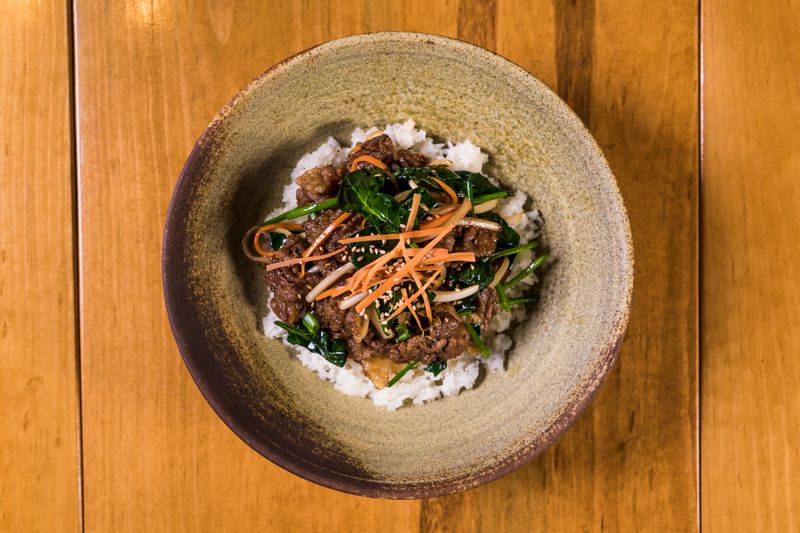
What's in this recipe
Ingredients
Base recipe makes 4 servings
- 1lbribeye steak (or sirloin), partially frozen
- 2Tbspsoy sauce
- 1Tbspbrown sugar
- 1Tbspsesame oil
- 3clovesgarlic, minced
- 2stalksgreen onion, sliced thin
- 1tspginger, grated (optional)
- 1Tbspvegetable oil (for cooking)
- 1headbutter lettuce (for wrapping)
- 0.5cupssamjang (store-bought or homemade)
Substitutions
No exact match? These work.
Ribeye steakSirloin, chuck eye, or any well-marbled beef
Soy sauceTamari for gluten-free
Brown sugarWhite sugar, honey, or Korean pear juice
BeefChicken breast (slice thin), pork, shrimp, or mushrooms for vegetarian
Equipment
- Hot skillet or grill
- Sharp knife (for slicing beef)
- Mixing bowl
- Cutting board
How to Make It
Freeze the beef for 1 hour until firm but not solid. This makes it easy to slice paper-thin. Slice against the grain into thin sheets.
Make the marinade: mix soy sauce, brown sugar, sesame oil, minced garlic, green onion, and ginger in a bowl.
Add the sliced beef to the marinade. Toss to coat evenly. Marinate for at least 30 minutes, or overnight for deeper flavor.
Heat a skillet or grill on high heat. Add vegetable oil.
Cook the beef in a single layer — do not crowd the pan. Let it sear for 30 seconds before stirring. Do not keep stirring — Maangchi says if you keep stirring, water comes out.
Cook for 1-2 minutes until browned and caramelized. The thin slices cook fast.
Serve immediately. Wrap in lettuce with a dab of ssamjang, or serve over rice.
About this dish
Bulgogi is the dish that introduced Korean food to the world. Thin-sliced beef, marinated in soy sauce, sugar, garlic, and sesame oil, seared on a hot pan until caramelized. It is sweet, savory, and so tender it barely needs chewing. Maangchi says “Korean bulgogi means that meat is sliced thinly.” That thinness is the whole point — it lets the marinade penetrate fast and the meat cook in seconds.
The marinade is simple. Soy sauce, brown sugar, sesame oil, garlic, green onion. That is the base. Jia Choi says garlic and leek are “must have ingredients for bulgogi.” The sugar balances the salt. The sesame oil adds nuttiness. If you want it spicy, add gochujang — Jet Tila’s version does this and calls it “spicy bulgogi.” If you want it traditional, keep it sweet and savory.
The Slice Matters More Than the Marinade
The beef must be sliced thin. Paper-thin. If it is thick, it is not bulgogi — it is just marinated steak. The easiest way to get thin slices: freeze the beef for 1 hour until firm but not solid. Jet Tila says “not frozen like a block of ice — if I push it, I can still see the protein strands moving apart.” Then slice against the grain into thin sheets. Ribeye is the best cut because the marbling keeps it juicy even when sliced thin.
Jia Choi shows a quick version where you do not need to marinate at all — just toss the sliced beef in soy sauce and sugar and cook immediately. It works because the slices are so thin that they absorb flavor in minutes. For deeper flavor, marinate overnight. But even 30 minutes is enough for thin beef.
What to Serve Bulgogi With
Bulgogi is never eaten alone. It is part of a meal that includes rice, ssam (wraps), and banchan (side dishes). The classic way: take a lettuce leaf, add bulgogi, a dab of ssamjang, maybe some kimchi. Fold it. Eat it in one bite. Maangchi makes bulgogi lettuce wraps with homemade ssamjang — doenjang, sugar, gochujang, and sesame oil. She says “just a little bit” of ssamjang because a full tablespoon is very salty.
Bulgogi deopbap — bulgogi over rice — is the quick weeknight version. Just pile the cooked beef over a bowl of rice and add a fried egg. It is the Korean equivalent of a rice bowl, and it is ready in 15 minutes. Leftover bulgogi makes excellent fried rice the next day — chop it up, toss it in a hot pan with rice, kimchi, and sesame oil.
If you want that same sweet-savory beef as a rice bowl with an egg on top, make a Korean beef bowl. Leftovers go in kimchi fried rice. For the wrap paste, mix ssamjang.
Nutrition per serving
Source: U.S. Department of Agriculture, Agricultural Research Service. FoodData Central, 2019. fdc.nal.usda.gov
Frequently Asked Questions
What cut of beef is best for bulgogi?
Ribeye is the best — well-marbled and tender. Sirloin or chuck eye are more affordable. Freeze 1 hour before slicing for paper-thin cuts.
Do I need to marinate bulgogi overnight?
Overnight is best. But Jia Choi's quick version cooks immediately. Even 4 hours works. Thin beef absorbs flavor fast.
Why is my bulgogi watery instead of seared?
The pan is not hot enough or you are stirring too much. Don't keep stirring — let it sear. Use a really hot pan.
What is ssamjang?
The thick paste for wrapping. Mix doenjang + gochujang + sesame oil + sugar. Use just a little bit — a full tablespoon is very salty.
Can I make bulgogi without beef?
Yes. The marinade works with chicken, pork, shrimp, or mushrooms. The sauce works with vegetables too.