Kimbap (Gimbap): Korea's Seaweed Rice Roll Guide
Kimbap (Gimbap) — Korea's seaweed rice rolls, explained. Rice, vegetables, and fillings wrapped in roasted seaweed and sliced into bite-sized pieces.
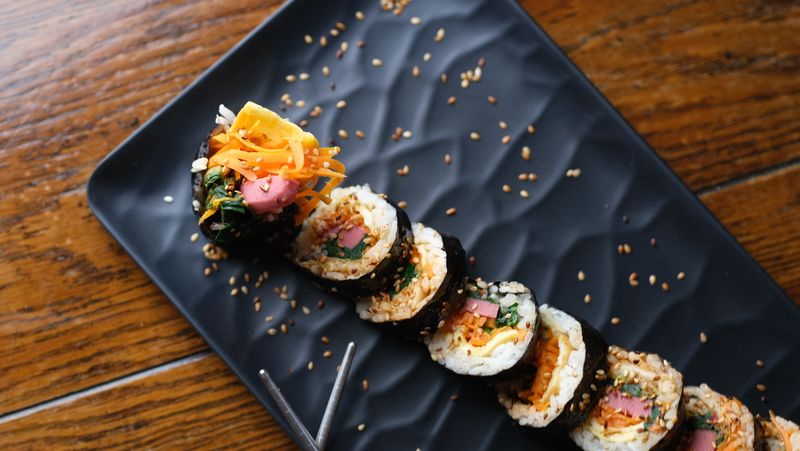
What's in this recipe
Ingredients
Base recipe makes 4 servings
- 3cupscooked short-grain rice, lukewarm
- 5sheetsroasted seaweed (gim)
- 2Tbspsesame oil (for rice) + more for finishing
- 0.5tspsalt (for rice)
- 2largeeggs, beaten with salt, fried as thin sheets
- 1mediumcarrot, julienned and lightly sautéed
- 1cupspinach, blanched 30 sec, squeezed dry, seasoned
- 1smallcucumber, seeds removed, shredded, salted, squeezed dry
- 1piecedanmuji (yellow pickled radish)
- 1cantuna, drained + 1 Tbsp mayonnaise
- 1Tbspsesame seeds (for finishing)
Substitutions
No exact match? These work.
Short-grain riceAny sticky rice — must hold together when rolled
Danmuji (yellow pickled radish)Pickle daikon in rice vinegar + sugar for 30 minutes
TunaBeef (marinated bulgogi), ham, crab meat, or just vegetables
Bamboo matRoll using just your hands — press firmly (Maangchi)
Equipment
- Bamboo rolling mat
- Sharp knife (wipe with wet cloth between cuts)
- Cutting board
- Large mixing bowl (for rice)
- Frying pan (for egg sheets and fillings)
How to Make It
Season the rice: mix lukewarm rice with 1/2 tsp salt and 1-2 tsp sesame oil in a large bowl. The rice should be warm, not hot — spread it thinly over the seaweed without tearing.
Prepare fillings: julienne carrot and sauté lightly. Blanch spinach for 30 seconds, rinse in cold water, squeeze dry, and season with salt and sesame oil. Remove seeds from cucumber, shred, pickle in salt 15 minutes, rinse and squeeze dry. Fry beaten eggs as thin sheets and cut into strips.
Toast the seaweed: hold each sheet over low heat for a few seconds until fragrant. Shiny side faces down on the bamboo mat.
Spread rice: place a sheet of seaweed shiny-side down on the mat. Spread a thin, even layer of rice (less than 1 cup), leaving 2 inches bare at the top edge. Press down gently so the rice sticks.
Layer fillings: arrange carrot, spinach, cucumber, danmuji, egg strips, and tuna in a line across the center. Do not overfill — too many ingredients makes it hard to roll.
Roll: lift the edge of the mat closest to you, tuck it over the fillings, and roll tightly away from you. Press firmly to compact. Use the bare seaweed edge to seal the roll.
Finish: rub sesame oil over the roll for shine and flavor. Sprinkle with sesame seeds.
Slice: wipe your knife with a wet cloth before each cut. Slice into bite-sized pieces (about 8-10 per roll). Serve immediately.
About this dish
Kimbap is Korea’s answer to the sandwich — except it is better. Rice seasoned with sesame oil and salt, spread on a sheet of roasted seaweed, layered with colorful fillings, rolled tight, and sliced into bite-sized pieces. Every Korean has a memory of kimbap — school picnics, lunch boxes wrapped in foil, road trips where someone brought a batch from home. Maangchi calls it “a perfect dish for picnic.” She is not wrong.
The rice is the foundation. It must be lukewarm, not hot, and seasoned with sesame oil and salt — that is what makes kimbap taste like kimbap and not just rice wrapped in seaweed. Aaron and Claire say seasoning the rice “makes the flavor come alive.” The seaweed should be toasted over low heat before rolling — it becomes fragrant and rolls without cracking. Spread the rice thinly and evenly, leaving two inches bare at the top. That bare edge is what seals the roll.
The Fillings Are Flexible
Traditional kimbap has a standard set of fillings: julienned carrots, blanched spinach, egg strips, danmuji (yellow pickled radish), and some kind of protein. Tuna mixed with mayonnaise is the most popular. Bulgogi beef is the upgraded version. Ham or crab meat is the budget option. The key is that everything is cooked and sliced thin — kimbap fillings are never raw.
Danmuji is the one ingredient Maangchi says she cannot make kimbap without. The yellow pickled radish adds a sweet, tangy crunch that cuts through the savory rice and fillings. If you cannot find it at a Korean grocery store, pickle daikon in rice vinegar and sugar for 30 minutes.
Aaron and Claire show ten variations, from rice paper gimbap (pan-fried for crispiness) to mayak gimbap (mini rolls with a wasabi-soy dipping sauce). The mayak version is the street food snack sold at Gwangjang Market in Seoul — small, addictive, and gone in minutes. The dipping sauce is half a tablespoon wasabi, one tablespoon soy sauce, one tablespoon vinegar, and half a tablespoon sugar.
What to Serve Kimbap With
Kimbap is a complete meal in a roll. Rice, protein, vegetables, all wrapped together. But Koreans usually serve it with a few things on the side: a bowl of kimchi, a small dish of soup (doenjang jjigae or seaweed soup), and maybe some pickled radish. The soup balances the dry rice and seaweed.
Kimbap is the ultimate portable food. It does not need a plate, it does not need utensils, and it tastes just as good cold as it does hot. Pack it in a lunchbox wrapped in foil, or arrange it on a plate cut-side up to show the colorful cross-section. Either way, eat it the same day — kimbap dries out quickly and is never as good the next day.
A small bowl of doenjang jjigae or a plate of kimchi is the usual home setup. Packed as street food, it travels with tteokbokki.
Nutrition per serving
Source: U.S. Department of Agriculture, Agricultural Research Service. FoodData Central, 2019. fdc.nal.usda.gov
Frequently Asked Questions
What is the difference between kimbap and sushi?
Kimbap uses sesame oil-seasoned rice; sushi uses vinegar-seasoned rice. Kimbap fillings are always cooked; sushi often uses raw fish. The flavor profiles are completely different.
Why is my kimbap falling apart?
The rice is too dry or too wet. Use lukewarm, slightly sticky rice. Spread thinly, leave 2 inches at top. Roll tightly with a bamboo mat. Do not overfill.
Do I need to toast the seaweed before using?
Yes. Toast over low heat for a few seconds — it becomes more fragrant and rolls without cracking.
What is danmuji and can I skip it?
Danmuji is yellow pickled radish — sweet, tangy, and crunchy. It is essential. If unavailable, pickle daikon in rice vinegar and sugar for 30 minutes.
How do I keep kimbap from drying out?
Wrap tightly in plastic wrap or foil immediately after cutting. Do not leave uncovered. The rice dries out quickly when exposed to air.