Korean Fried Rice
Korean Fried Rice (Bokkeumbap) — kimchi, rice, whatever is in the fridge. The dish that turns leftovers into dinner.
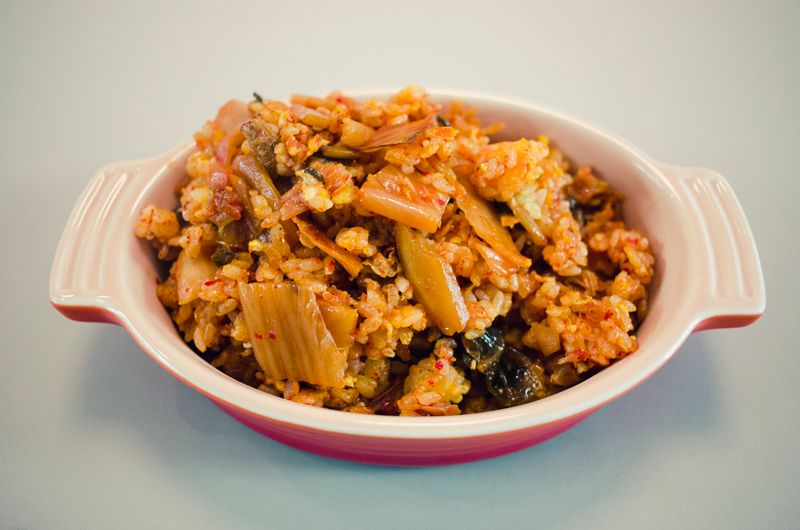
What's in this recipe
Ingredients
Base recipe makes 3 servings
- 3cupscooked rice (day-old is best)
- 5ozbeef, cut into small pieces (or spam, ham, shrimp, tofu)
- 1cupkimchi, chopped
- 1mediumonion, thinly chopped
- 1smallzucchini, diced
- 0.5cupmushrooms, sliced
- 0.25cupred bell pepper, diced
- 3clovesgarlic, minced
- 1Tbspoyster sauce
- 2tspsesame oil
- 2Tbspvegetable oil
- 1largeegg (optional, for topping)
Substitutions
No exact match? These work.
BeefSpam, ham, bacon, shrimp, canned tuna, or tofu for vegetarian
KimchiUse aged/sour kimchi for best flavor. Fresh kimchi works but is milder
Oyster sauceSoy sauce, or gochujang for spicy version
Day-old riceFresh rice spread on a tray and refrigerated 30 minutes to dry
Equipment
- Non-stick skillet or wok
- Spatula or wooden spoon
- Cutting board and knife
How to Make It
Heat vegetable oil in a non-stick skillet over high heat. Add garlic and stir fry for 30 seconds until fragrant.
Add chopped onion and stir fry for 1 minute until slightly sweet and translucent.
Add beef and cook, stirring, until browned and cooked through, about 2-3 minutes.
Add chopped kimchi and stir fry for 2 minutes. The kimchi will soften and release its flavor into the oil.
Add zucchini, mushrooms, and bell pepper. Stir fry for 1-2 minutes until just softened. Add green chili pepper if you want heat.
Push everything to the side. Add the rice to the center of the pan. Break up any clumps with your spatula.
Drizzle oyster sauce and sesame oil over the rice. Toss everything together, stirring constantly, for 2-3 minutes until the rice is heated through and slightly crispy.
Taste and adjust — add more oyster sauce for depth, sesame oil for nuttiness, or kimchi juice for tang.
Serve immediately. Top with a fried egg if desired, and sprinkle with sesame seeds and green onion.
About this dish
Bokkeumbap is the dish Koreans make when the fridge is full of leftovers and nobody wants to cook. It is stir-fried rice — that is what the word means — but the real recipe is whatever you have on hand. Beef, kimchi, vegetables, an egg on top. Maangchi says it best: “all kinds of food stuff is in the refrigerator. Take it out, all chop it up and make this healthy, delicious, and most nutritious bokkeumbap.”
The kimchi is what makes it Korean. Without it, you are making fried rice. With it, you are making bokkeumbap — sour, spicy, and deeply savory from the fermented cabbage mixing with the hot oil. The oyster sauce is the other secret. Maangchi adds it to every batch and says it “really makes it special, delicious.” It gives the rice a savory depth that soy sauce alone cannot match.
The Rice Matters More Than You Think
Day-old rice is better than fresh rice for fried rice. Freshly cooked rice is too moist and sticky — it clumps together and steams in the pan instead of frying. Day-old rice has dried out in the fridge, so the grains separate and get slightly crispy in the hot oil. If you must use fresh rice, spread it on a tray and refrigerate it for 30 minutes to dry out. The drier the rice, the better the fried rice.
The pan matters too. A non-stick skillet works fine at home. A wok is better if you have one — the high heat and curved sides let you toss the rice so every grain hits the hot surface. The key is high heat and not overcrowding. If the pan is too small, the rice will steam instead of fry.
What to Serve Korean Fried Rice With
Bokkeumbap is a complete meal in one pan. Rice, protein, vegetables, all stir-fried together. But Koreans usually serve it with a few things on the side: a bowl of kimchi, a small dish of soup (doenjang jjigae or seaweed soup), and maybe some pickled radish. The soup balances the dry, fried rice. The kimchi adds more fermented flavor.
A fried egg on top is not optional — it is the finishing touch. The runny yolk mixes into the rice and adds richness. Some people crack the egg directly into the rice while stir-frying. Others fry it separately and lay it on top. Either way, the egg is what turns bokkeumbap from leftovers into dinner.
Sour kimchi is what makes it bokkeumbap instead of plain fried rice. A small bowl of doenjang jjigae next to it is how it shows up at home.
Nutrition per serving
Source: U.S. Department of Agriculture, Agricultural Research Service. FoodData Central, 2019. fdc.nal.usda.gov
Frequently Asked Questions
What is the difference between Korean fried rice and Chinese fried rice?
Korean bokkeumbap uses kimchi as a key ingredient, giving it a sour, spicy flavor. Chinese fried rice uses soy sauce and egg. Korean fried rice finishes with sesame oil.
Why is day-old rice better for fried rice?
Fresh rice is too moist and sticky. Day-old rice has dried out, so grains separate and fry properly. If using fresh rice, spread on a tray and refrigerate 30 minutes.
Can I make bokkeumbap without meat?
Yes. Use whatever is in the fridge. Vegetables and kimchi alone work well. Add tofu, canned tuna, or just an egg on top.
What makes bokkeumbap taste like restaurant bokkeumbap?
High heat, day-old rice, and oyster sauce. The combination of kimchi juice, oyster sauce, and sesame oil is the restaurant flavor.
What is the best pan for fried rice?
A non-stick skillet works fine. A wok is ideal. The key is high heat and not overcrowding the pan.